
.webp)
 By Uma Iyer
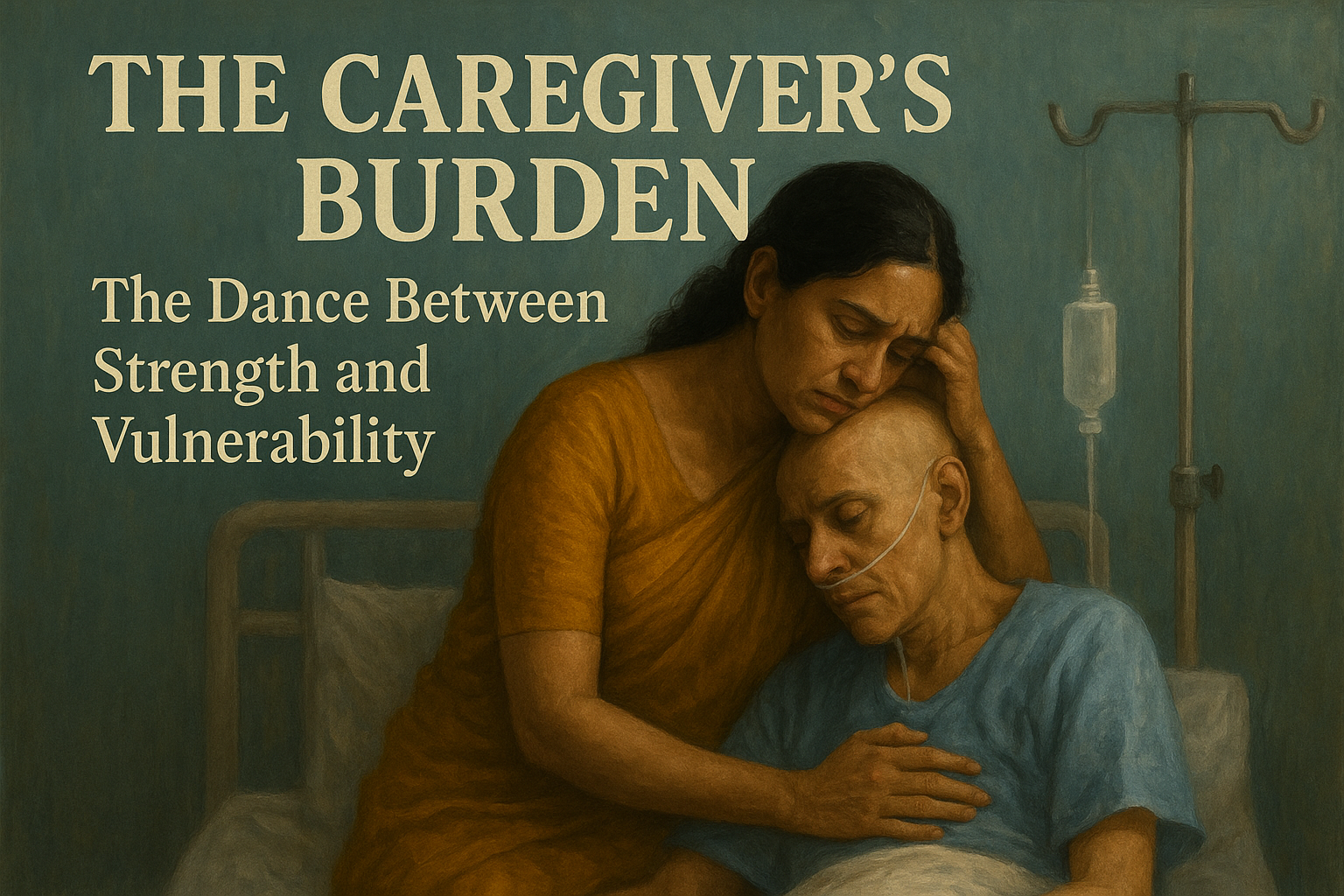
 The Caregiver’s Burden: The Dance Between Strength and Vulnerability
We visited Indrayani Hospital and Cancer Institute in Alandi, Pune, as part of our on-campus training for the PG Diploma in Psycho-Oncology course offered by the Texas School of Mental Health. We learnt a lot that day about cancer, its treatment, the required technology, infrastructure and more, but one important takeaway was observing the caregivers: their quiet resilience, the fatigue behind their smiles, and the strength it takes to keep showing up every single day.
Caregiving is one of those words that sounds gentle; almost noble. But anyone who has ever been one knows it’s far from simple. It’s not just about being there for someone who is ill; it’s about quietly reshaping your entire life around another’s needs. It’s about the exhaustion that settles into your bones, the guilt of feeling tired, and the endless balancing act between love and limits.
During my time as a caregiver to my father-in-law, who had Alzheimer’s, we were fortunate in many ways. We had an extended family that took turns, and we never had to worry about finances; two blessings that not everyone has. And yet, there were days when time felt heavy, when fatigue blurred into frustration, and when a good night’s sleep felt like a luxury.
Now, when I look at caregivers of those battling cancer, I see an even deeper kind of exhaustion; emotional, physical, and existential. Because cancer doesn’t just affect the body. It takes away certainty. It disrupts dreams, ambitions, and joy. It leaves behind fear; of loss, of pain, of not being enough.
In India, caregiving often becomes a family affair. We pride ourselves on our sense of duty and togetherness; “We’ll manage,” we say, and we usually do. But what we don’t always manage is ourselves.
Caregivers, especially women, often give up jobs, social lives, and self-care without a second thought. The emotional toll is compounded by financial strain, lack of access to palliative care, and the social expectation of being endlessly strong. There’s little space to say, “I’m tired,” or “I’m scared,” without feeling guilty.
The truth is, even the most loving caregiver needs care. Because you cannot pour from an empty cup.
If You Are a Caregiver: Small Things That Help
You may not be able to change the diagnosis or the treatment, but you
can take small steps to make the journey sustainable; for your loved one and for
yourself.
- Ask for help early.
- Create a rhythm, not a routine.
- Accept your emotions.
- Stay informed, not overwhelmed.
- Make space for your own life.
Don’t wait till you break down. Whether it’s arranging for meals, sharing hospital duties, or just having someone to talk to ; let people in. Sometimes help comes from unexpected places when you ask.
Cancer care can be unpredictable. Instead of rigid schedules, build flexible rhythms, morning quiet time, daily walks, shared meals. It brings a sense of normalcy without the pressure of control.
You will feel angry, helpless, guilty, and sometimes even resentful. It doesn’t make you a bad caregiver; it makes you human. Allow yourself those feelings. Find safe spaces; friends, counsellors, support groups - to release them.
Cancer information can be both empowering and terrifying. Pick credible sources, stay in touch with the doctor, but avoid late-night internet spirals.
Even a few minutes for yourself; a cup of tea in peace, a book, music, a walk; can recharge you. It’s not selfish; it’s survival. Like one of the ladies in the Chemotherapy waiting room at Indrayani Hospital said, “I light the lamp and read my prayer book every morning. Those 15 minutes are my time.”
If You Know a Caregiver: Be Their Anchor
Sometimes, the best way to support a patient is to support their
caregiver.
- Don’t say, “You’re so strong.”
- Offer specific help.
- Stay connected.
- Encourage respite.
It’s meant kindly, but it can make them feel they can’t show weakness. Instead, say, “It’s okay to be tired. How can I help?”
“Let me know if you need anything” is kind but
vague. Instead, offer something
concrete; “I can bring dinner tomorrow,” or “I’ll sit with your father
for a few
hours so you can rest.”
I remember one particularly exhausting day years ago. My father-in-law was being
more stubborn than usual or maybe I had reached my limit. I was too tired to
cook dinner and on the verge of crying when the doorbell rang and I received a
food packet. My best friend had heard the tiredness in my voice and cared enough
to order sustenance. She lived more than a 1000 kms away and yet managed to
comfort me that day.
A simple message, a short visit, or remembering the caregiver’s birthday can mean more than you realise. When everyone’s attention is on the patient, caregivers often fade into the background. Like one of the caregivers mentioned, our session with them was one of the first time somebody had asked for his name and how he felt.
If possible, help arrange small breaks; an evening out, a movie at home, or even just an uninterrupted nap.
Caregiving, especially in cancer, is a journey of contradictions, deep love and deep fatigue, moments of despair and flashes of hope. It’s also a journey that changes you.
You begin to understand time differently. You learn what truly matters. And somewhere between hospital corridors and home-cooked meals, you discover quiet reserves of strength you never knew you had.
Not every story ends in recovery, but every act of care is an expression of love. And sometimes, love; given freely, quietly, persistently; is what makes the unbearable, bearable.
Author - Uma Iyer
Batch Number / Alumni Status - Batch 3
Qualification - MA English Literature, PG Diploma in Journalism & Mass Comm, PG Diploma in Counselling & Psychotherapy, PG Diploma in Psycho-Oncology (ongoing)
Current Occupation / Designation - Co-Founder of PixelPhrase Creative Studio